


Uncanny Parallels: Book Publishing and an Unstable Job Market

Let’s get the obvious out of the way first. Getting a book published is hard. Like really, really hard. I could just say difficult, but really, really hard creates better emphasis.
I used to think all you needed was raw writing talent. While helpful, there are so many variables that go into it. Timing. Agent/Publisher preferences. The marketplace. How you present your work. And, of course, luck.

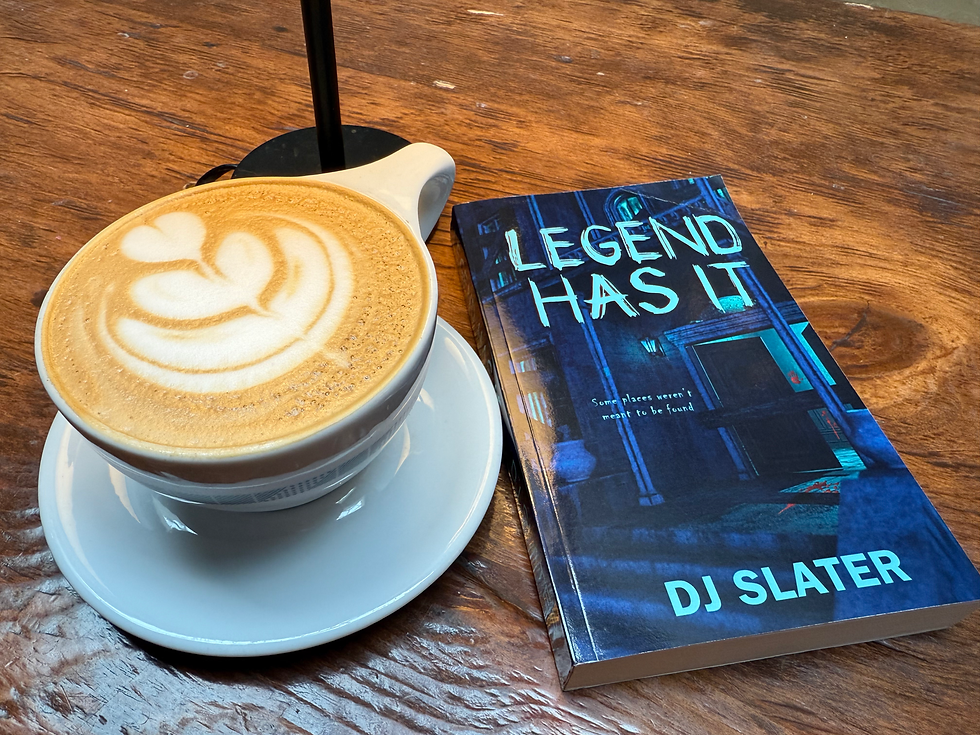
When I was querying (the term for shopping your book around) Legend Has It, I dealt with several different responses, the majority being all the many ways you can say no. Any writer who has gone through this process knows this all too well. I received responses along the lines of, “Not what I’m looking for”, “Wrong fit”, “Not the best to represent this”, “Didn’t connect with it”, and my personal favorite – silence.
It wasn’t all rejections along the way. I was fortunate to land a few requests for the full manuscript during this stretch, but never anything beyond that. That changed once I connected with Rowan Prose. After that happened, all the trial and pain associated with this process disappeared.
This year, I was reminded of how challenging this process was through a different set of circumstances. In mid-April, my role at DeanHouston, a boutique marketing firm in Covington, Kentucky, was eliminated. It was a sudden blow that left me with a wave of complicated emotions. Once the raw ones subsided, I dusted off my resume and went into job-hunting mode.
It had been a while since I was in this position. The last time I looked for a job was in 2010 when I joined KHL Publications (formerly Diesel & Gas Turbine Publications). I learned quickly that much had changed since that time.
For starters, the use of AI in the hiring process. I used to design my resume in a unique way so that it wouldn’t look like a cookie-cutter document that every hiring manager sees in their inbox. What I found is that AI scrubbers couldn’t properly read my resume. Instead of looking at my creative approach, the scrubbers scanned for keywords that mirrored the job description.
In the past, a hiring manager would see my resume and give it a close look. From there, they could see how certain skill sets aligned with the job, even if they weren’t exactly the language used in the job description. They were able to understand how certain skills set mesh well with those required for the open role.
The AI scrubbers, however, don’t account for nuance. They don’t realize that a journalism background fits any role that is heavy on research, analysis, critical thinking, meeting tight deadlines, task and time management, and communication. The scrubbers simply look for keyword matches and then flag the resumes that best align with those keywords. In other words, my skill sets were viable, but my resume didn’t portray that to a keyword-obsessed module.
There were plenty of other surprises during this process, such as getting quick rejections on multiple applications; getting late-night form rejections after great interviews; and hearing nothing after a positive introduction. I wish I could say this process was over quickly, but it dragged on for nearly eight months.
During that time, I had a lot of emotions and even more questions. I pondered my worth, my abilities, my experience, and my mental fortitude. I even wondered if I would ever get a job again. When you send out roughly six to 10 applications every week and have long gaps between interviews, you start believing you’re the problem. Perhaps, but the truth tends to be less painful.
Sometimes you’re not the right fit. Sometimes you don’t know the right people. Sometimes the timing is off. Sometimes it just wasn’t meant to be.
As this job hunt experience unfolded, I kept thinking back to my time in the querying trenches with Legend Has It. Both experiences had eerie parallels. Doubt crept in more often than I care to admit. Each rejection stirred up pain. I wondered if I was good enough to be an author/new associate. At times, it felt like my novel/next job wasn’t going to happen.
But there’s a lesson in these parallels. At least, there’s one major theme I took away from both experiences. Keep going. Had I stopped trying, Legend Has It would still be a Word doc without an audience, and I might not have landed a great job with a wonderful Milwaukee company.
Keep going.


Comments